

Ethical Will Writing:
Letter to My Children from Barbara Morgenstern, 2025
To my dearest children from their mother Barbara Morgenstern,
I write to you today to pass on the legacy of our family in one slice of life—the worldwide polio pandemic of the 1950s that hit Grandma Marilyn, but miraculously spared Grandpa Carl, me and my brother, your Uncle Mike.
In your young lives you, unfortunately, have experienced the worldwide pandemic of Covid and the race for a vaccine as the world shut down. I write this so you will know the courage of your grandparents. Their strength is why we are here today.
Love you forever and hope our family’s story of polio also reminds us that we are so lucky to be here. How we return this privilege is a lifelong question.
Just the word “vaccine” triggers memories of polio that struck my mother in the 1950s and of the Sabin vaccine developed in Cincinnati that eradicated the dreadful disease in the United States and much of the world.
The virus could cause paralysis and limb deformities and photos from that time are heart wrenching.
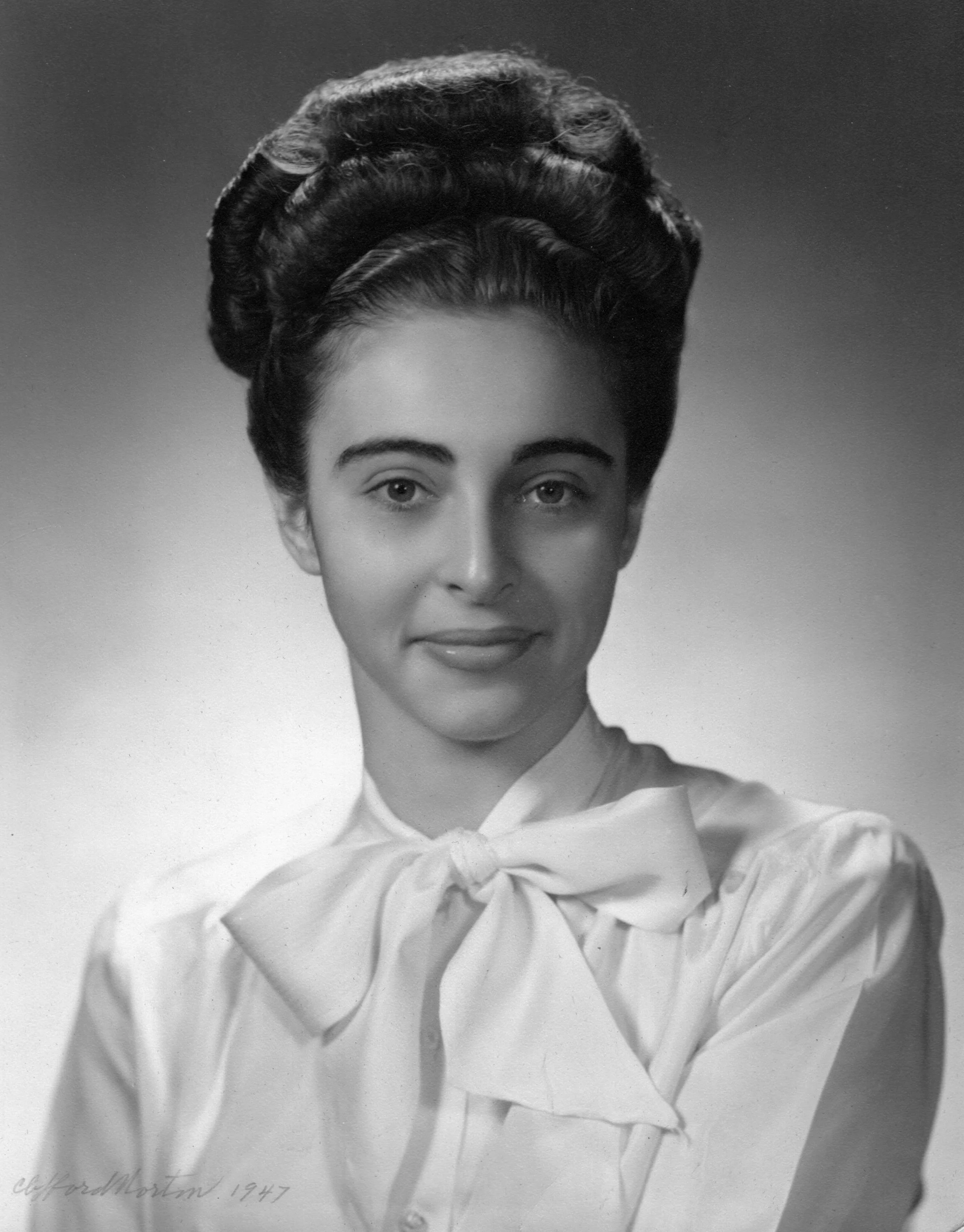
When the virus infected my mother Marilyn Morgenstern (pictured), it can be viewed as a miracle that my brother Mike and I and our father, Carl Morgenstern, were spared. We lived in the small town of Hamilton, Ohio, and we kids were toddlers.
When my mother contracted the disease spread by fecal or oral exposure, our little family was living together in the closest of quarters, a virtual petri dish for the polio virus, it seems to me.
According to the literature: [W]hen a person is infected with polio, it is expected that polio transmission among susceptible household contacts will occur in nearly 100 percent of children and over 90 percent of adults, according to eMedtv.
Following my mother’s diagnosis, the three of us were given injections of gamma globulin, the only therapy available at the time. It was believed to give partial protection, just five to seven weeks.
The worldwide, “infantile paralysis”—so-named because it infected primarily children--struck at a vulnerable time in my parents’ lives, a microcosm of the worldwide panic. The year we were born, 1952, the United States experienced its worst polio year with 57,879 reported cases here and 600,000 worldwide.
Joining the post-World War II baby boom — my father had served in the U.S. Army in Europe — my parents produced two of us in one year. My brother was born in January and I in December. The slang term is “Irish twins.”
I wonder if my mother’s inevitable exhaustion after having two cesarean births in one year, the nearest family faraway in Cleveland, while my father struggled to build his law practice — doing his own typing at one point — contributed to a weakening of her immune system. And whether that made her more susceptible to polio than the rest of the family.
Mom was hospitalized and was among the lucky ones who eventually walked again. Very lucky, as only about one in 10 victims who were paralyzed recovered, with the majority confined to wheelchairs or to coffin-like "iron lungs" for the rest of their lives, according to the Children’s Hospital of Philadelphia.
My father said Jewish Family Service in nearby Cincinnati sent a nurse to help watch us kids and sometimes we would wave to my mother from the sidewalk outside the hospital, as she appeared at a window.
After my mother’s recovery her legs were weak for the rest of her life and she had several surgeries, one I remember to fuse her ankle for more support.
Though if I allow for miracles, a big one occurred in this polio story. Miraculously, just 20 miles south, at Cincinnati’s Children’s Hospital, Dr. Albert Sabin was developing an oral polio vaccine that eventually eradicated polio in the United States. Via sugar cubes doused with vaccine.
Importantly, the fact that patients took the weakened-but-live Sabin vaccine by mouth, rather than by injection as the earlier “killed” Salk vaccine required, made distribution much easier.
I remember lining up at an elementary school in Hamilton for my sweet dose. The front page, banner headline of our hometown newspaper screamed “Vaccine Program Gigantic Community Task.” The newspaper articles make me teary. One story said the community’s contributions were too numerous to list, but included “Ohio Ice Cream Co., Hamilton, offered the use of its refrigerated trucks for transport of the precious vaccine; Albers Super Markets, donated 300,000 cubes of sugar…” The county’s pharmacists “will be among the earliest risers” to prepare the doses, a story reported.
Dr. Sabin’s research concluded that some people had resistant antibodies in their blood to polio, suggesting that they had been infected with a weak strain of the virus that had left them resistant to more powerful versions of the illness, as in my mother’s unlucky case.
Perhaps myself, my brother and father were in that resistant-producing-infection category and, if so, that seems like a miracle — why did we dodge the crippling form of the polio bullet that struck my mother? It so easily could have gone the other way.
Dr. Sabin's live vaccine also eliminated the possibility that someone could remain immune from polio but still transmit the virus. Might this also have applied to us?
Even with all the scientific possibilities as to why we three were spared, in retrospect, it seems like a miracle.
Top that off with the amazing coincidence that Dr. Sabin’s breakthrough discovery occurred at a laboratory just miles from our home.
Cincinnati Children’s said of Dr. Sabin: “His thirty years at Cincinnati Children’s were well spent and he will be remembered as the man who made Cincinnati the first polio-free city in the U.S. and saved millions of children around the world from polio’s devastating effects.”
Dr. Sabin did not patent his vaccine and donated his discovery for the benefit of mankind.
All these events, coincidences, both terrifying and enthralling, leave me wondering — where did science start and miracles begin?
Maybe this oft-quoted saying is worth pondering: “There are only two ways to live your life. One is though nothing is a miracle. The other is as though everything is.”
Ethical Will Writing by polio victim Jane Meinrath Bloch
during her iron lung hospitalization
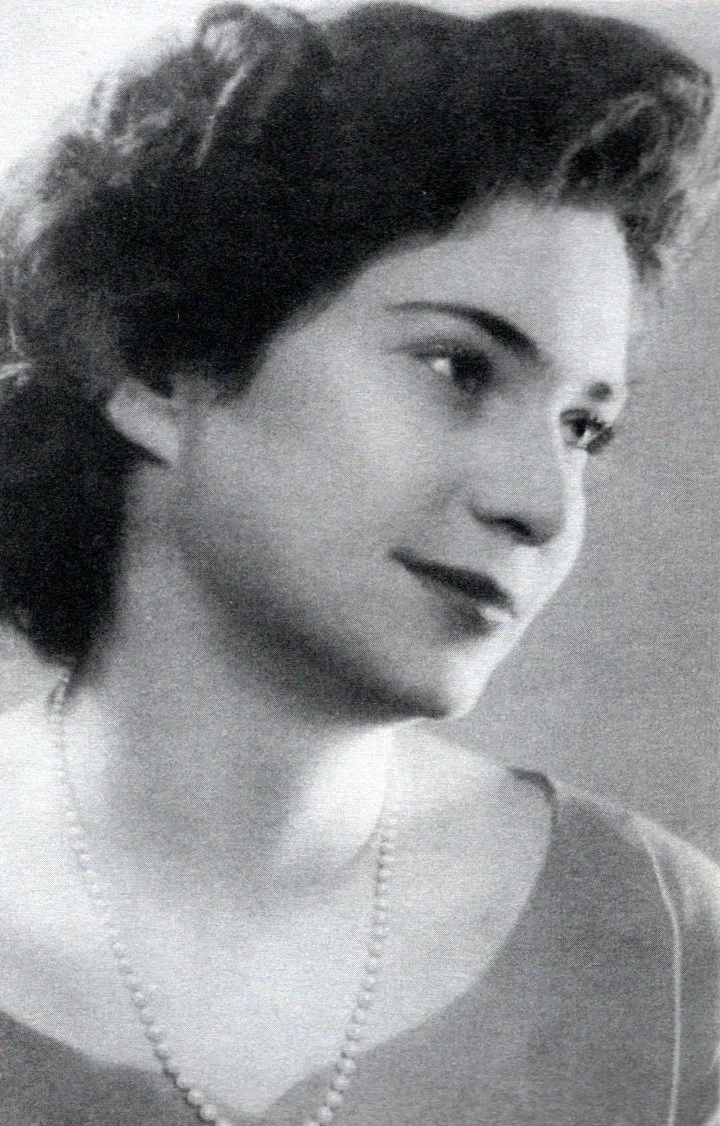
Jane Meinrath Bloch (1926-1967)
Writes to Her Son, Peter
May 4, 1963, Cincinnati, Ohio
My dear Peter:
I have wanted to write you a special letter for a very long time.
I have wanted to tell you about all the things that have happened these past fourteen years, starting from the hot August days in 1949 when the hospital ward was filled — sometimes with death or physical destruction, or sometimes miraculously with returned health. These were the days of the polio epidemic.
I want to take you with me through those dim summer days and then through the many that followed in increasingly shining succession…
We have not spoken together, you and I, much about God. Because I have felt so deeply, I have remained silent — too silent. And if you have felt, because my life has had little formal religion, that I have removed myself from deep belief, you would have been given reason to have concluded this.
I can only tell you that I have felt very close to God. In the very early days of my sickness, half destroyed and understanding little, I began a prayer, and each night the same simple words returned again and again to me: “Grant me the strength, the courage, and the wisdom.” There was no ending to the prayer, just those words, and the feeling that some spirit far greater than mine would hear me, and help me. And in my room over the years, this belief has grown stronger.
Although I know that there are disbelievers, I doubt that there are many men among us who in time of darkening trouble do not feel the need to turn to an unknown, but omniscient presence.
And in my room, thinking and believing, I have been restored. I share with you your deep feeling, and in a larger sense, like that calendar of time which I once feared, I am no longer torn when I acknowledge the force of my feelings. I have learned what I might not have learned had the hand of destiny not guided me into this very different life. Or was it, perhaps, the hand of God?
And so, Peter, dear, the chapters come to an end, but the story continues. There are just a few things left to be said.
When the time comes, as it inevitably must, that you and I will again be separated, I shall meet this with the greatest possible freedom of spirit, because I know, despite our closeness and great affection, you will be equally prepared for any separation. You are young, and independent, and strong, and you will find temporary sadnesses breached for you by your own freedom of spirit. You will always go ahead, even while welcoming the memories of what I hope is perhaps a uniquely experienced and enriched past.
I know now the hurdles of the years that you have passed, and so I know too the hurdles you will pass in the future, and by this knowledge I am freed.
And so we will continue to enjoy our tomorrows, you, and your father and I, each of us prepared in our own way for the future, and each of us supported by the bonds of our united pasts.
I have chosen to end my writing on an especially sun-warmed, summer day. The leaves are moving slowly in the beautiful tree outside my window, and the golden morning light throws shifting patterns into my silent room.
There will be many happy, sundrenched days ahead, and I will see you tomorrow and each sun-filled tomorrow thereafter.
And when there are no more tomorrows, we will have shared a splendid bond. And so as I began, with love, I end for now.
From a selection of Ethical Wills from the American Jewish Archives in Cincinnati, Ohio, a document study led by Dr. Gary P. Zola, Executive Director Emeritus.